
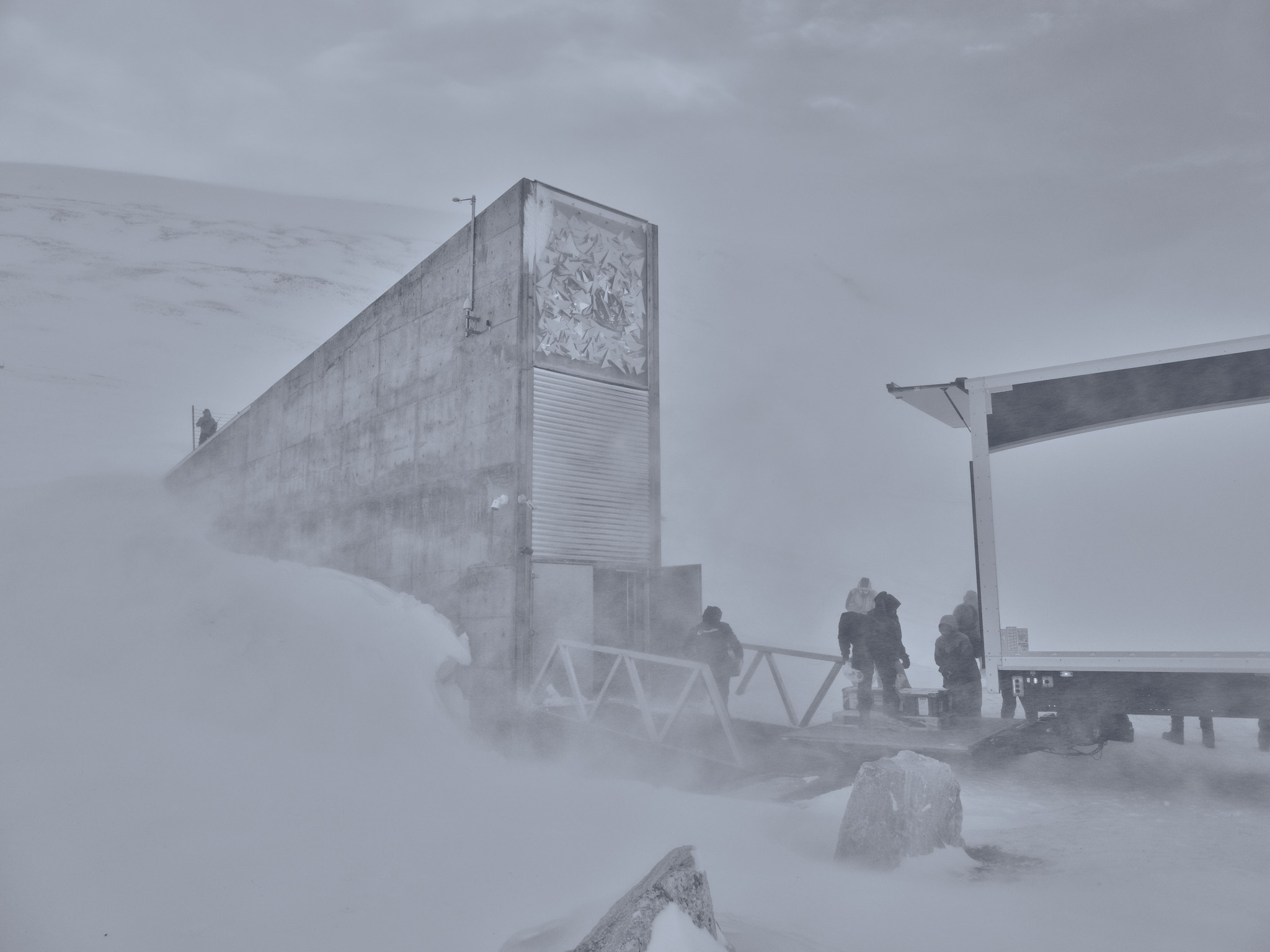
The Svalbard Global Seed Vault opened for its first deposit event of 2026 in February week 9. Seeds from two new countries, Guatemala and Niger, were deposited for the first time, and the Seed Vault received its first-ever deposit of olive seeds. In total, 8,880 seed samples from 12 depositors arrived for long-term safeguarding in the Arctic facility.
This 69th deposit brings the total of seed samples secured in the Seed Vault to 1,387,038. Located under permafrost deep inside a rocky mountain on the Norwegian island of Spitsbergen, the facility is managed by the Norwegian Government, the Nordic Genetic Resource Center (NordGen) and the Crop Trust.
The deposit brought together a mix of national genebanks, international research centres and community-linked collections. Seeds now backed up include:
- Cereals and legumes that are staples for millions of people across Africa
- Vegetables central to diets and nutrition worldwide.
- Traditional crops and an ancestor of maize from local Indigenous farmers in Guatemala.
- Olives, a crop whose fruit and oil have global gastronomic, cultural and economic significance.
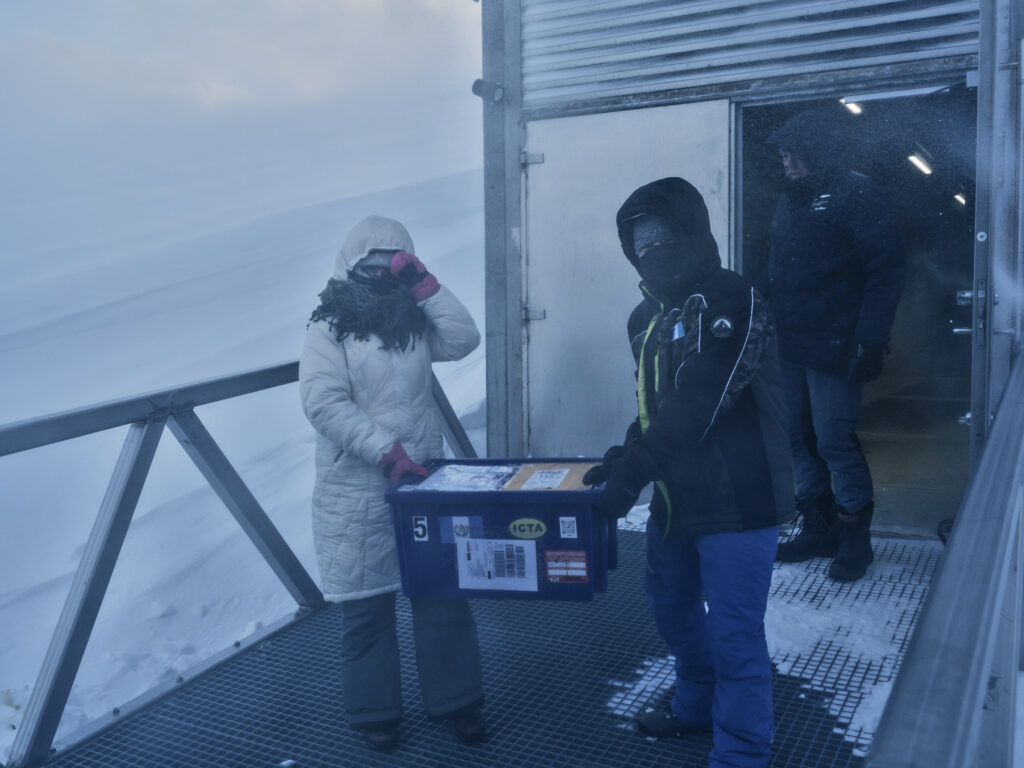 Photo: Omid Abolhasani-Svalbard Global Seed Vault.
Historic First
In a milestone for global conservation, the Olive Genebank of the University of Córdoba, part of the International Olive Council’s network of genebanks, brought olive seeds to the Svalbard Global Seed Vault for the first time.
The deposit included wild olive seeds from Spain and seeds representing the 50 most important cultivated olive varieties worldwide. Bringing these seeds to Svalbard was a key outcome of GEN4OLIVE, a European research project led by the University of Córdoba.
“Local olive varieties are endangered by ageing of trees, low profitability of traditional olive groves and the spread of improved varieties that are easier to mechanize. Wild relatives may be even more threatened from rising temperatures and devastating fires in Mediterranean forests,” said Dr Concepción Muñoz Díez of the University of Córdoba.
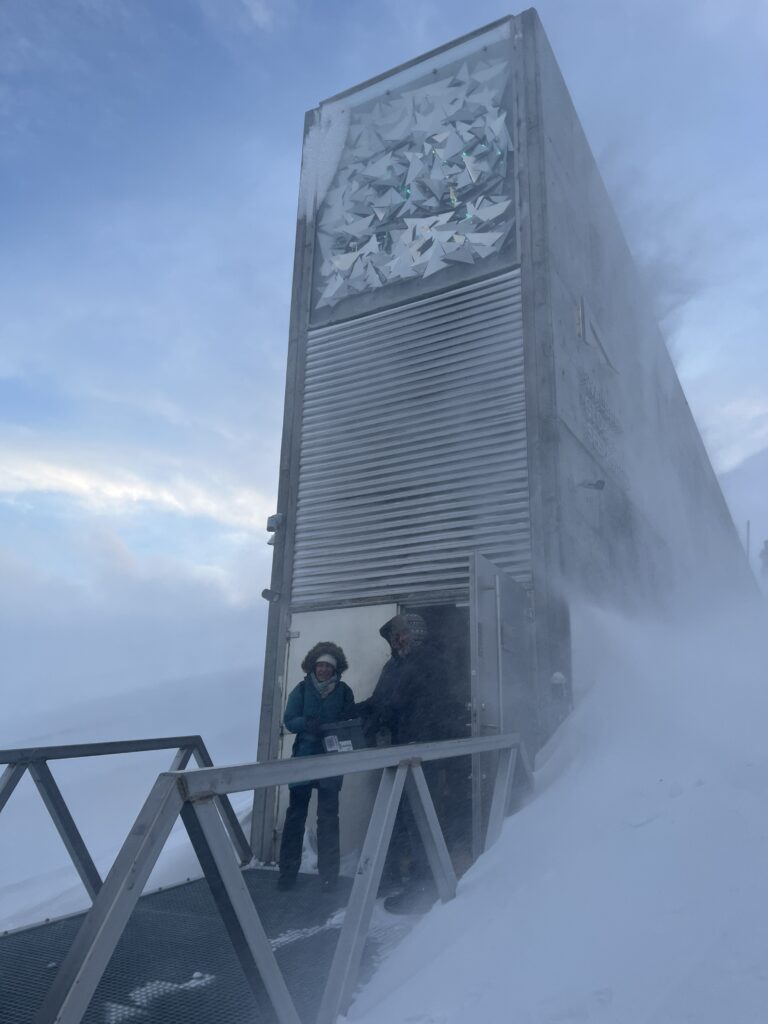 Photo: Crop Trust
New National Genebanks
National institutions from two new depositor countries sent seeds to Svalbard for the first time.
Guatemala’s national genebank, managed by the Instituto de Ciencia y Tecnología Agrícolas (ICTA), deposited 950 samples from 10 species. These crops include climbing and bush beans, maize, squash and amaranth. Twelve percent of Guatemala’s seed samples were contributed by the farmers of the Sierra de los Cuchumatanes through their community seedbank. The maize deposit includes two varieties of teosinte, a wild ancestor of maize native to the country. The deposit was facilitated by FAO Guatemala and supported through the Emergency Reserve for Genebanks, established jointly by the International Treaty on Plant Genetic Resources for Food and Agriculture (Plant Treaty) and the Crop Trust through the BOLD Project.
“The Emergency Reserve for Genebanks has enabled us to send our first duplicate to the Svalbard Global Seed Vault,” said Delmy Castillo, researcher at ICTA. “It also helped us renovate our cold storage room, install a temperature and humidity monitoring system, and regenerate 1,000 bean accessions.”
The national genebank in Niger at the Institut National de la Recherche Agronomique du Niger (INRAN) deposited 204 accessions of sorghum, cowpea, groundnut and pearl millet. The deposit included the traditional pearl millet variety Dogon Iri, a cultivar tied to the Dogon people of West Africa. This deposit was made possible through the Benefit-sharing Fund of the Plant Treaty.
“Crop diversity means security, pure and simple,” said Dan-jimo Baïna, genebank manager and researcher at INRAN. “Food security, nutritional security, income security and security for the environment and from the climate – all depend on it.”
The Benefit-sharing Fund of the Plant Treaty enabled two additional deposits. Mali’s Institut d’Economie Rurale (IER) shipped seeds of pearl millet, sorghum and other crops, and ICARDA, a CGIAR center based in Morocco, deposited seeds of Indigenous barley landraces.
Crop Diversity from Across the World
The latest deposit reflected the global scope of crop conservation, spanning the Americas, Europe, Africa and Asia.
From Africa, deposits included staple cereals and legumes, alongside agroforestry tree diversity deposited through ICRAF, a CGIAR center based in Kenya.
From Asia, the World Vegetable Center backed up 1,651 samples from 95 species and subspecies, including eggplant, peppers and other vegetables that underpin diets and enhance cuisines worldwide.
From Europe, Germany’s IPK returned with the largest deposit of this cycle – 2,836 samples – including wheat, beans and other crops. Spain’s deposit included cereals, vegetables and legumes, alongside the olives.
This first deposit of 2026 underscores the need for a strong global system of genebanks.